Credit: KI
When the news broke that Red Bull was not just sponsoring but acquiring a majority stake in the BORA – hansgrohe cycling team, the tectonic plates of the professional peloton shifted. This was not merely a new logo on a jersey; it was the arrival of a sporting juggernaut, a brand whose history in Formula 1 and other ventures is defined by a singular, relentless pursuit of dominance. The 2025 season marks the first full campaign under this new world order, and with it comes a weight of expectation that could crush lesser teams. Team Manager Ralph Denk, once the leader of a plucky German outfit, now speaks the language of a global CEO, stating his ambition is not just to compete, but to “be the best in every way” and to find “the Max Verstappen of cycling”.
This transformation is more than just financial. It is a complete operational and philosophical overhaul. The team now has full access to Red Bull’s legendary Athlete Performance Center (APC) in Austria and has poached top-tier performance staff, including aerodynamics guru Dan Bigham from rivals INEOS Grenadiers. As Head of Performance Dan Lorang succinctly put it, “What I used to do alone, now three people do”. After a 2024 season that saw a triumphant Vuelta a España victory for Primož Roglič but a Tour de France campaign described as a “disaster” by the team’s own lofty new standards, the mission for July 2025 is clear: this is the year the Red Bull project must take flight. This is the year they prove they are not just contenders, but conquerors.
The Fight for the Crown: The Roglič-Lipowitz Conundrum
At the heart of Red Bull – BORA – hansgrohe’s Tour de France ambitions lies a fascinating and complex leadership dynamic. They arrive not with a single spearhead, but with a trident of mountain talent so potent it could redefine the tactical landscape of the race.
Lineup
1. Primož Roglič: The General’s Last Stand:
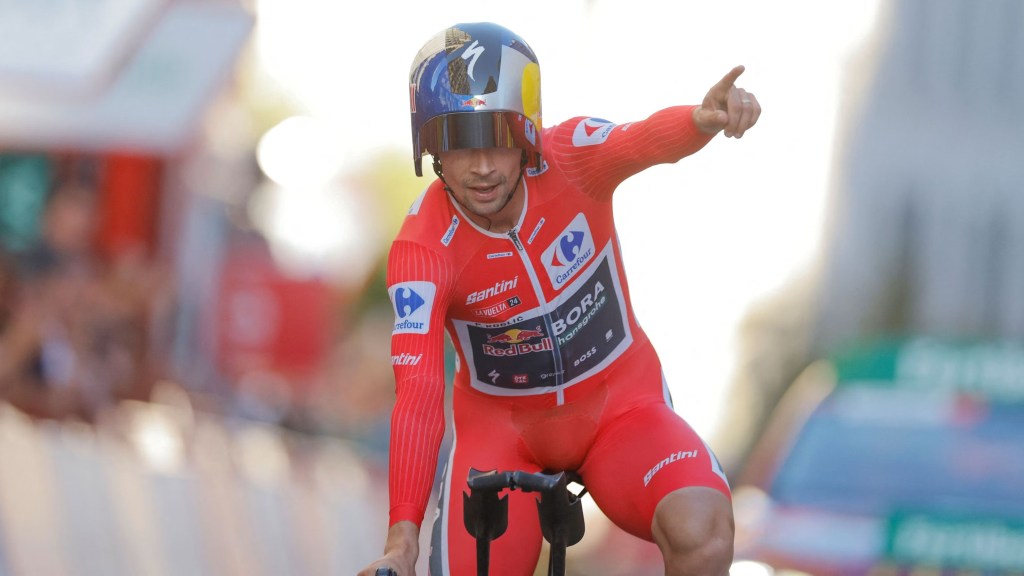
Credit: Heute.at
At 35 years old, Primož Roglič is a man racing against time, his rivals, and the ghosts of his own past. He departed the all-conquering Jumbo-Visma team for one reason: a final, untethered shot at the one prize that has so cruelly slipped through his fingers, the Tour de France. His career is a study in resilience, a dramatic cycle of devastating crashes followed by astonishing comebacks. On five separate occasions, he has followed a Grand Tour disappointment with a victory in the next one he started.
His 2025 season has eerily followed this script. A commanding overall victory at the Volta a Catalunya, where he looked imperious, was followed by a frustrating, crash-induced abandonment at the Giro d’Italia. For any other rider, this would be a disaster. For Roglič, this is his signature “redemption arc” setting the stage for July. The 2025 Tour route, with a long, flat 33 km individual time trial on Stage 5 and a decisive 10.9 km mountain time trial to Peyragudes on Stage 13, seems tailor-made for his powerful, explosive style. Yet, the biggest battle will be internal. In interviews, he appears to be managing the immense pressure, focusing on a “day by day” approach and acknowledging that his primary rival, Tadej Pogačar, is “one gear ahead”. This is his last, best chance to exorcise the demons of the 2020 Planche des Belles Filles and complete his palmarès. The entire Red Bull project hinges on whether he can finally navigate three weeks of France unscathed.
2. Florian Lipowitz: The Prince in Waiting

Credit: Florian Lipowitz @Kakoula10 CC BY-SA 4.0, via Wikimedia Commons
Just as Roglič’s narrative seems set in stone, a new character has exploded onto the scene, threatening to rewrite the entire script. Florian Lipowitz, the 24-year-old German, has transformed from a promising talent into a bona fide phenomenon in 2025. His results are staggering: second overall at Paris-Nice, fourth at the Tour of the Basque Country, and a stunning third place at the Critérium du Dauphiné, where he beat every GC contender not named Pogačar or Vingegaard.
This is not the performance of a super-domestique; it is the calling card of a future Grand Tour champion. His emergence creates a fascinating strategic paradox for the team. Publicly, Lipowitz remains deferential, stating that his “main goal will be to help” Roglič, who is “still the big leader”. But his strength presents a tactical goldmine. The team can now play a two-card trick that will give rivals at UAE Team Emirates and Visma | Lease a Bike nightmares. They can send Lipowitz on the attack, forcing them to chase a rider who has proven he can drop almost anyone. This could isolate the main favorites and create the perfect launchpad for a Roglič counter-move. However, this dynamic is fraught with peril. What happens if, on the slopes of the Col de la Loze in the final week, the apprentice proves stronger than the master? The memory of the Roglič-Vingegaard leadership transition at the 2022 Tour looms large. How Red Bull – BORA – hansgrohe manages this two-headed monster—turning it into a tactical advantage rather than a source of internal friction—will be the most scrutinized and decisive element of their race.
3. Aleksandr Vlasov: From Leader to Tactical Weapon
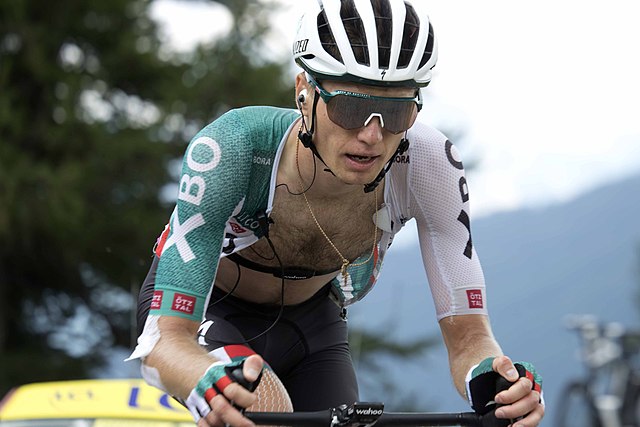
Credit: Aleksandr Vlasov @filip bossuyt Creative Commons Attribution 2.0
The ultimate testament to the team’s depth is Aleksandr Vlasov. A rider who has finished fifth in the Tour de France (2022) and fourth in the Giro d’Italia (2021) is now designated as a mountain helper and stage hunter. For most teams, he would be the undisputed leader. For Red Bull – BORA – hansgrohe, he is their agent of chaos.
His 2025 season has been quiet, not as good as his 2022 year. Netherless Vlasov is the perfect satellite rider, a threat too dangerous to ignore. On the major mountain stages like Hautacam (Stage 12), Mont Ventoux (Stage 16), or Courchevel (Stage 18), the team can launch him into the early breakaway. This presents a tactical nightmare for their rivals. Do they burn their own domestiques to chase down a former top-five finisher, leaving their own leaders exposed to the inevitable attacks from Roglič and Lipowitz? Or do they let him go, risking he gains minutes on the general classification? Vlasov’s role is not simply to pull on the front; it is to be a constant, disruptive threat that forces every other team to race on Red Bull’s terms.
4. Laurence Pithie: The Multi-Tool for Red Bull’s Tour Ambitions
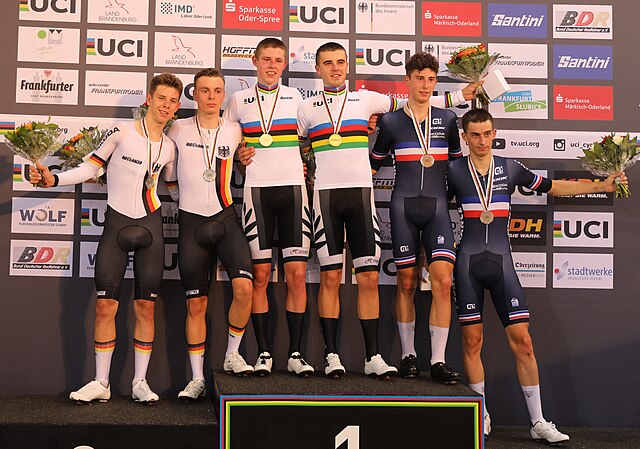
Credit: Laurence Pithie @Nicola Wikimedia Commons, CC-by-sa 4.0
A Tour is not won by climbers alone. Red Bull – BORA – hansgrohe has assembled a versatile and powerful support unit designed to win stages, control the chaos of the opening week, and deliver their leaders to the mountains with their ambitions intact. Another important piece of this puzzle is the exciting new signing from New Zealand, Laurence Pithie. A true “multi-tool,” Pithie’s strong classics campaign 2024 made him interesting for a lot of cycling teams. His decision was to join the new Red Bull – Bora – hansgrohe project. His classics season 2025 was mixed, but recently he has shown improving form at the Dauphine. He will serve as the third-to-last man in the train but also has the freedom to hunt for stages from breakaways on the hilly days that litter the first two weeks of the race.
5. Mick van Dijke: The Engine Room and The Enforcer
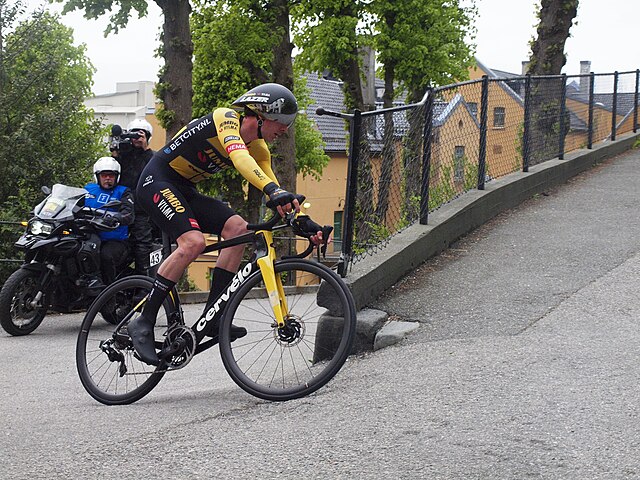
Credit: Mick van Dijke @(User:Løken) Creative Commons Attribution-Share Alike 4.0 International
Protecting Roglič through the treacherous first week is paramount, given his history of crashes. To this end, the team has deployed a powerful defensive unit. Mick van Dijke, a 1.90m Dutch powerhouse, is the perfect engine for the flat stages, tasked with shielding his leaders from the wind and positioning the team at the front. His high rating on cobbles makes him especially valuable for the nervous early stages.
6. Gianni Moscon: Road captain with protective instinct
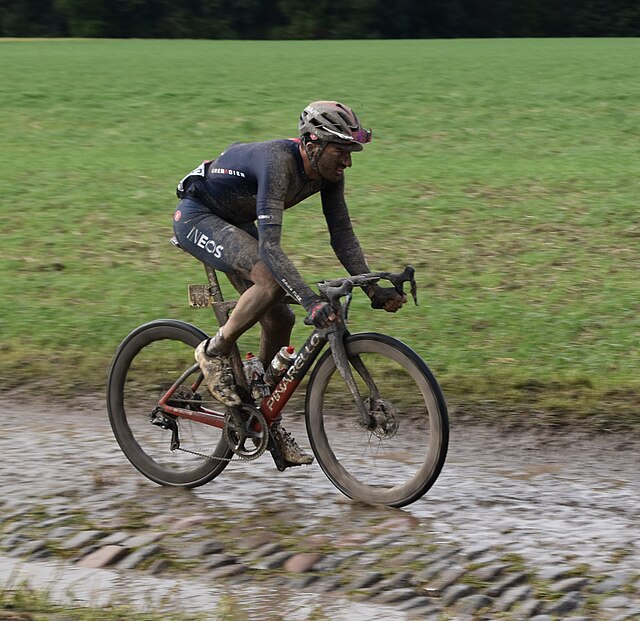
Credit: Gianni Moscon @Felouch Kotek Creative Commons Attribution-Share Alike 4.0
The role of road captain falls to the formidable Gianni Moscon. Signed for his experience and grit, Moscon is the team’s on-bike brain, a rider known for his aggressive positioning and tactical awareness, honed while serving as a key domestique for Remco Evenepoel in previous years. His modest 2025 results are irrelevant; his job is not to win, but to ensure his leaders don’t lose. Together, Van Dijke and Moscon form a fortress around Roglič and Lipowitz. A successful first week for them is one where nothing happens, delivering their GC hopes to the first mountain stage fresh and ready to fight.
7. Danny van Poppel: The Lead-Out Maestro
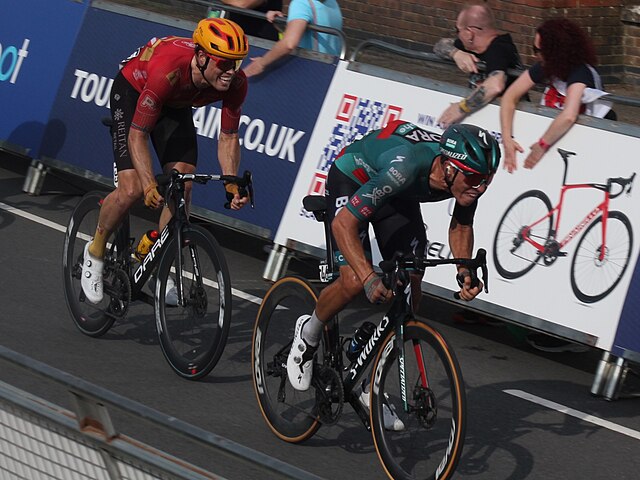
Credit: Danny van Poppel @Geof Sheppard Creative Commons Attribution-Share Alike 4.0
Every great sprinter needs a great pilot, and in Danny van Poppel, Meeus has arguably the best in the business. The 31-year-old Dutchman is the son of sprinting royalty, Jean-Paul van Poppel, and he rides with an innate tactical intelligence that seems coded into his DNA. He is not just a lead-out man but an artist in the chaotic final kilometers. Cycling analytics models award him a near-perfect 99-point rating for his lead-out craft, a testament to his intelligence and positioning. But to label him merely a guide would be a gross disservice. Van Poppel is a world-class sprinter in his own right, possessing a 92-point sprint rating that matches Meeus’s and having already claimed two stage wins for himself at the Tour de Hongrie this season. He also became Dutch road race champion a few moments ago, beating top sprinters such as Olav Koij and Dylan Groenewegen. This dual threat makes him the ultimate final man and a dangerous Plan B for the team on tougher, more attritional sprint stages where his experience and power can be the decisive factor.
8. Jordi Meeus: The Champs-Élysées Conqueror
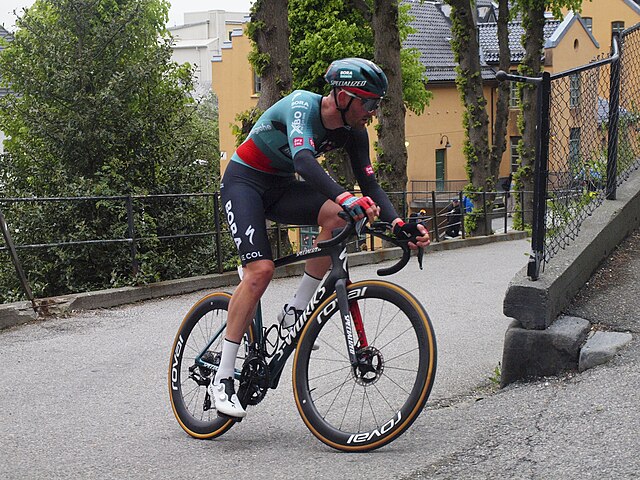
Credit: Jordi Meeus @(User:Løken) Creative Commons Attribution-Share Alike 4.0
The designated spearhead for the flat stages is the 26-year-old Belgian, Jordi Meeus, a rider who carries the confidence that only a victory on the Champs-Élysées can bestow. His stunning triumph in the final stage of the 2023 Tour de France was the biggest of his career, proving he can deliver on the grandest stage. Meeus enters the 2025 Tour in scorching form, having already secured three victories this season: a stage at the Volta ao Algarve and, crucially, two confidence-boosting wins in June at the Tour de Suisse and the prestigious Copenhagen Sprint. These late victories signal a perfectly timed peak. With a powerful 92-point sprint rating from analytics models, he is ranked as the 6th best sprinter at the start of the race and is a clear threat for multiple stage wins.
The 2025 Tour de France route appears to be a perfect canvas for the masterpiece Red Bull – BORA – hansgrohe is trying to create. Its blend of flat sprints, treacherous hilly stages, two crucial time trials, and iconic mountain-top finishes offers an opportunity for every single rider on this versatile squad to shine. Their tactical approach can shift daily, from controlling for a bunch sprint to blowing the race apart in the high mountains.
Final Analyses and Predicition
Red Bull – BORA – hansgrohe arrives at the 2025 Tour de France as arguably one of the most fascinating teams in the race. Their potential is immense, but so are the challenges.
Strengths:
- Unprecedented Tactical Depth: The ability to deploy three distinct GC-level threats in the mountains (Roglič, Lipowitz, [Vlasov]) is a luxury.
- Total Versatility: They have a credible contender for victory on every type of terrain the Tour offers.
- The Red Bull Factor: Backed by near-limitless resources, cutting-edge sports science, and an ingrained corporate culture of winning.
- World-Class Support: A proven sprint train and an experienced, powerful engine room provide a stable foundation for their lofty ambitions.
Weaknesses/Challenges:
- The Pogačar/Vingegaard Problem: They are not operating in a vacuum. They face two of the most dominant Tour riders of the modern era, both backed by formidable super-teams of their own.
- The Leadership Question: The Roglič-Lipowitz dynamic is their greatest strength and their greatest potential weakness. It must be managed with tactical precision and zero ego.
- Roglič’s Durability: The captain’s propensity for finding misfortune in the Tour’s first week remains the team’s biggest liability.
Prediction:
Yellow Jersey: A podium finish in Paris is a realistic and primary objective. Toppling both Pogačar and Vingegaard will require tactical perfection and perhaps a dose of misfortune for their rivals. The three-pronged mountain attack gives them the best possible chance to engineer a victory.
Green Jersey: Unlikely. While they will contest sprints, the team’s focus is on the overall classification. Meeus will be a threat for stage wins but is not on the same tier as pure sprinters like Jasper Philipsen or Jonathan Milan, who are the outright favorites for the points classification.
Stage Wins: Highly likely. The team’s versatility should see them celebrate multiple times. A prediction of 2-3 stage wins seems achievable, likely spread between Meeus in a sprint, Pithie from a hilly breakaway, and one of their GC leaders conquering a mountain stage.
The 2025 Tour de France will be the ultimate proving ground. It is the moment we discover if the immense investment, strategic overhaul, and sky-high ambition can truly give this team wings and launch them to the very pinnacle of the sport.
 The Daily Ride


Leave a comment